
Specialist Marine Services
Specialist Marine Services

Clearvac Engineering Asia offers comprehensive marine tank cleaning services for various tank types, including Fuel, Black, Grey, Sludge, Freshwater, and Ballast. We also handle waste disposal during the cleaning process and provide fuel polishing for reuse. Tank superchlorination services are also available.
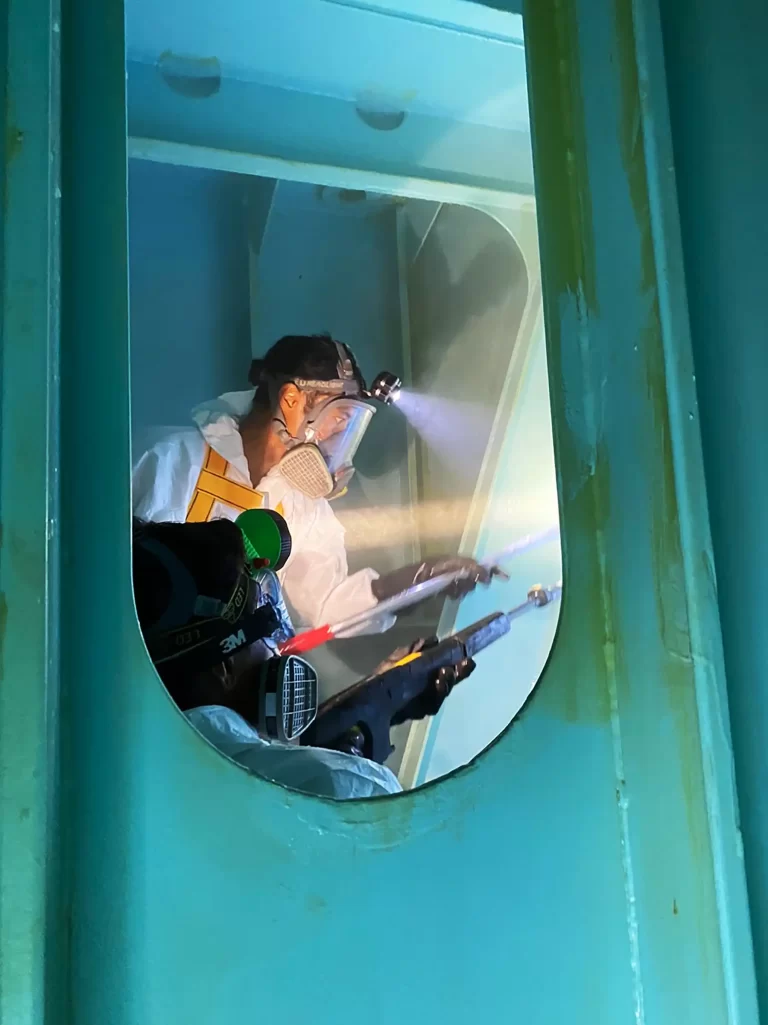
Cleaning Fuel Tanks is essential to maintaining the efficiency of a vessel’s engines and generators. Regular vessel Fuel Tank cleaning and inspections should be part of your maintenance plan. The buildup of contaminants, caused by microbial growth in the fuel, can clog filters. Algae, water, and microorganisms can degrade the fuel and produce waste products. Blocked filters can reduce engine performance and fuel economy, and, in the worst case, lead to engine shutdown at sea. Thoroughly cleaning, blasting, and lining the tanks with an epoxy tank lining before severe corrosion sets in is a more cost-effective and faster solution to ensure uninterrupted operation.
Potable water tank cleaning and disinfection should be performed every 6 to 12 months. We’ve observed significant microbial growth in Fresh Water Tanks that haven’t been opened, inspected, or sanitised for over a year. The original tank linings from yacht manufacturers typically last around 2 years due to factors like insufficient surface cleanliness and improper lining application. Identifying early tank lining failures is crucial to preventing excessive corrosion and metal loss. Repairing metal damage and replacement are costly and lead to significant expenses and downtime during haul-out.
Thoroughly cleaning, blasting, and lining the tanks with an epoxy tank lining before severe corrosion sets in is a more cost-effective and faster solution. Black and Grey Water Tanks are highly corrosive due to the release of hydrogen sulphide from accumulated waste. The upper part of the tank lining exposed to the tank’s atmosphere experiences a faster decline in lifespan. Detecting this early through regular cleaning and inspections is crucial to prevent mandatory replacement by classification societies like Lloyd’s.
The most common cause of engine breakdowns and failures is fuel contamination.
Contamination typically begins with water intrusion from condensation. Cladosporium resinae, a common type of algae, tends to thrive in this water. Water is essential for the development of algae, which, in turn, consumes fuel and oxygen to produce food. In any untreated tank, airborne algae can rapidly become a serious issue. The development of this ‘fuel bug’ and the accumulation of natural waxes and resins in the fuel lead to significant sludge buildup, clogged filters, and carbon deposits.
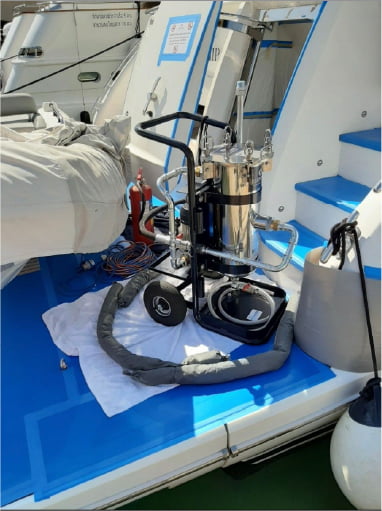
Fuel polishing is performed on-site with our advanced carbon filtration system.
Explore Our Nautical Expertise