Clearvac Engineering Asia Logo

Clear Air, Clear Water, Healthier Yacht Crew

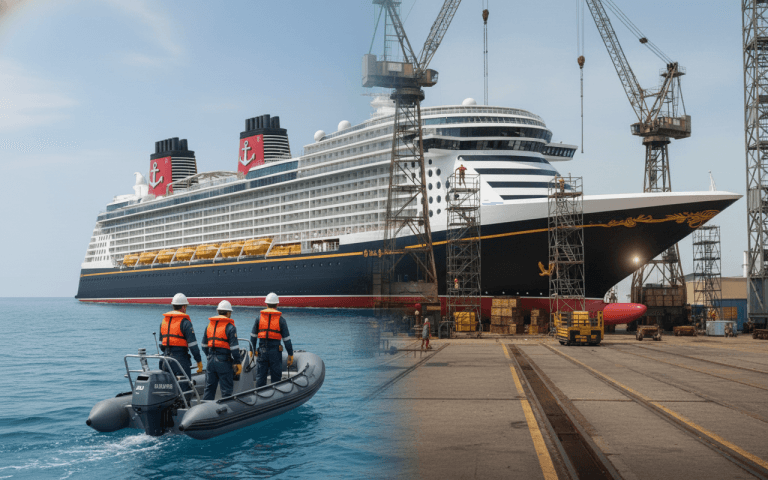
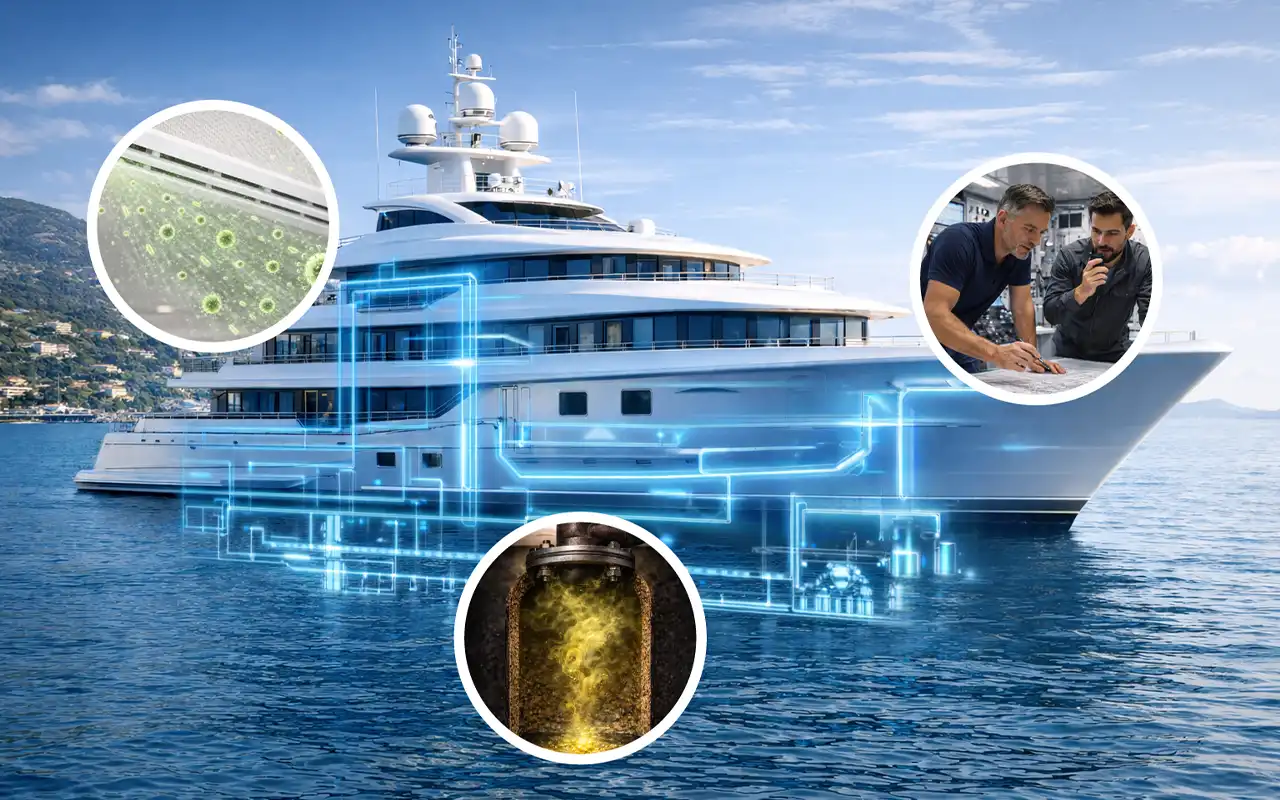
Superyacht at sea with illustrated onboard air, water and waste system pathways, showing HVAC contamination, engineers reviewing systems, and wastewater build-up.

Life Onboard a Superyacht is Life Inside an Engineered Envelope

Air moves quietly through concealed ducting. Water is bunkered, stored, heated, and cooled; pipe runs sit warm for extended periods. Then the sudden, inevitable demand returns, and it’s all-hands-on-deck. When systems perform well, they disappear into the background. That invisibility is earned.

When environmental controls drift, the signs don’t present as technical failures: they are recurring throat irritations, crew fatigue that won’t quite lift, the incidental belly bout, or that faint odour nobody can seem to locate, all symptoms typically dismissed as minor, yet the cause is almost always structural.

There is one distinction worth keeping front of mind: compliance and control are not the same thing. A yacht may return a clean tap sample while the upstream pipes remain scaled. A cabin may smell okay, yet a fan coil is silently harbouring pathogens. The vessel can feel perfectly balanced through a heavy charter season and then, almost imperceptibly, slip out of alignment during a warm lay-up.
 
When complex systems confront unstable conditions head-on, the fallout seems immediate. It almost never is.

Onboard hygiene is better understood as a form of systems behaviour, not a checklist of isolated tasks ticked off and forgotten.

That view reflects Clearvac Engineering Asia’s work onboard yachts, where visible complaints often trace back to hidden changes in airflow, water movement, moisture, access, and maintenance history.

The Illnesses Linked to Onboard Systems
Maritime public health data indicate consistent patterns when water and air systems decline. These patterns are not inherently mysterious, but they are all too often misread.
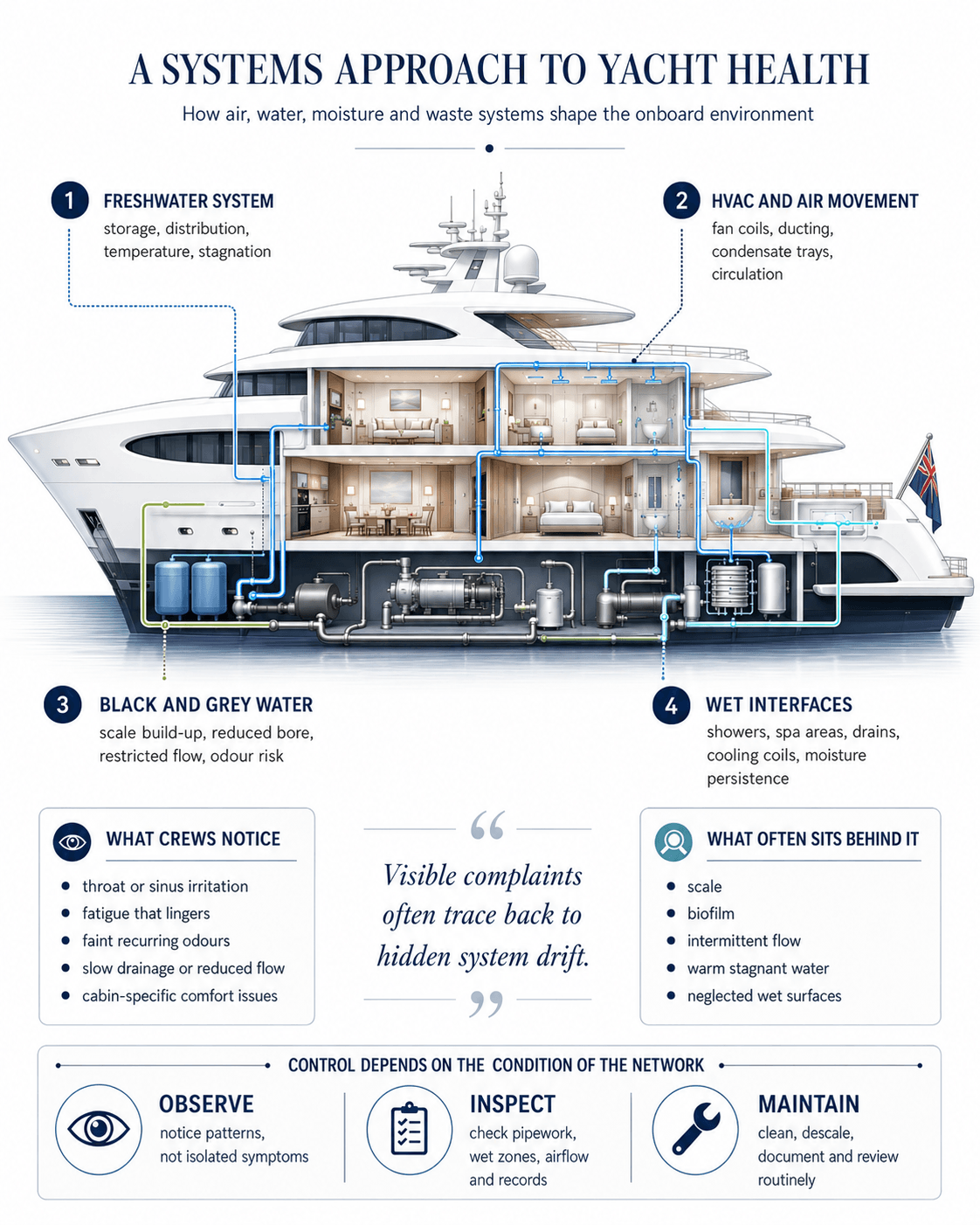
Infographic showing how superyacht air, water, HVAC, black and grey water, and wet interface systems affect onboard hygiene and crew health.
Onboard hygiene depends on connected systems. Air movement, freshwater, waste flow, moisture and maintenance history all shape the environment guests and crew experience. (click to enlarge)

Waterborne Illness

Potable water remains the highest-consequence pathway, particularly where temperature, stagnation, and system condition provide the foothold unseen hitchhikers need. Legionella continues to attract the headlines, and with good reason: The European Centre for Disease Prevention and Control recorded over ten thousand confirmed cases of Legionnaires’ disease across EU/EEA countries, the highest notification rate ever recorded in the region.
 
For yachts, the relevance lies less in the figures and more in the mechanism they reveal. Legionella proliferates where temperatures favour growth and water flow is intermittent.
 
Exposure through inhalation is the culprit: aerosolised vapour from showers, spa pools and water features. Any outlet capable of generating fine spray can become a transmission vector. The pathway is as architectural as it is biological; the yacht itself determines where water becomes airborne.
 
Legionella colonisation has long been documented. Recent vessel water system surveillance continues to reveal stagnation and intermittent flow. Oxidising tablets can reduce microbial load at outlets, but do not address biofilm or mineral scale within the wider distribution network, where microorganisms may be partially shielded from disinfectant exposure. This is not an indictment of yachts, but confirmation that intermittent network operation favours bacterial growth. The Legionella organism is heavily sensationalised, yet preventable.
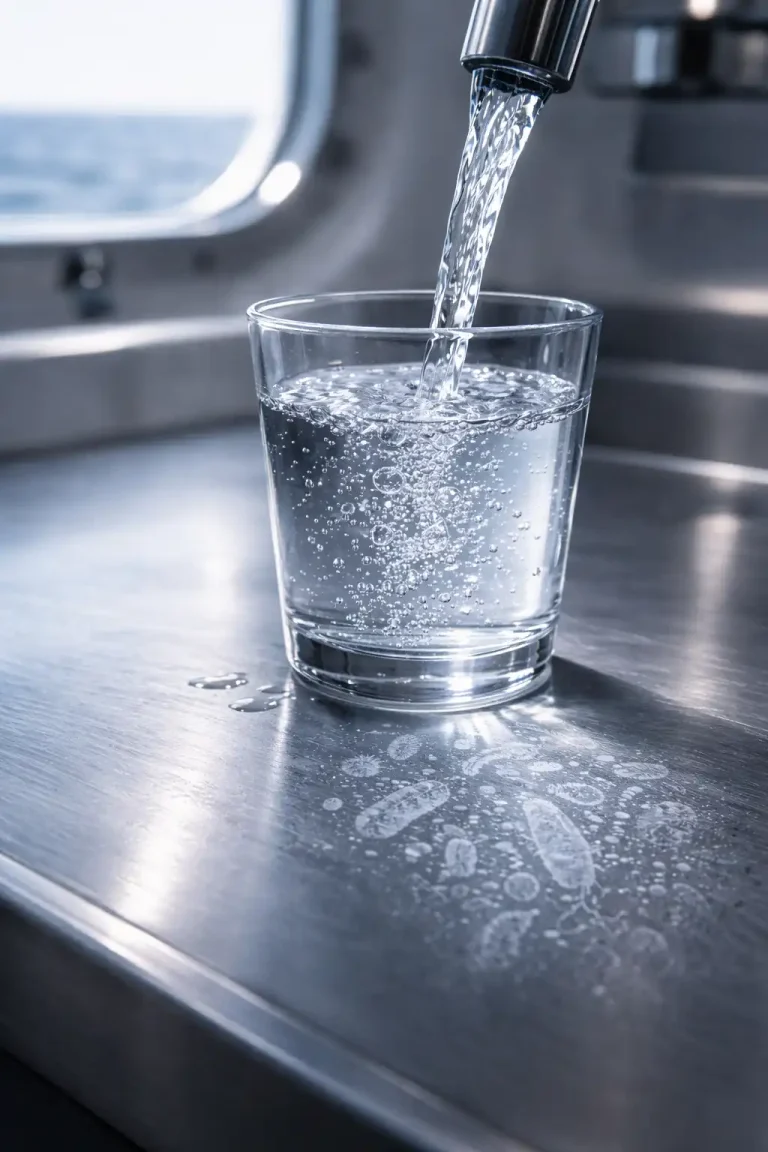
Glass of potable water being filled from a yacht faucet, with subtle microbial imagery suggesting water hygiene risk onboard.
Potable water can appear clean at the outlet while upstream system conditions still affect onboard hygiene.

Legionella Prevention Checklist – Practical Steps for Yacht Crews:

These checks broadly align with established hot and cold water system temperature control principles used to reduce Legionella risk.
 
– Flush all taps, showers, and seldom-used outlets regularly, especially after periods of low use or lay-up.
 
– Maintain hot water at or above 60°C in storage tanks and ensure distribution reaches at least 50°C at outlets.
– Keep cold water below 20°C wherever possible.
 
– Inspect and clean shower heads, hoses, and aerators at set intervals to remove scale and biofilm.
 
– Ensure all parts of the system, including dead-legs and infrequently used branches, are included in routine maintenance.
 
– Monitor temperature and residual disinfectant levels (where dosing is used) at representative points in the system.
 
– After any works, repairs, or periods of inactivity, carry out thorough flushing before re-entering service.
 
By making these checks habitual, crews can interrupt the conditions needed for colonisation and protect onboard health.

Symptoms in Circulation

HVAC systems can gradually circulate mould spores, bacteria, and accumulated debris from fan coils, condensate trays, and ductwork into accommodation spaces, and the people living in those spaces slowly absorb the consequences.
 
The symptoms tend to read as inconvenience rather than illness: persistent sinus or throat irritation, low-grade headaches, a fatigue that seems more climatic than physical, allergic responses that seem to track with location, and so on.
Charters move. So do symptoms. Travel, fatigue, and shifting seasons do the rest.
Air systems seldom create illness.
 
They simply spread what already exists.
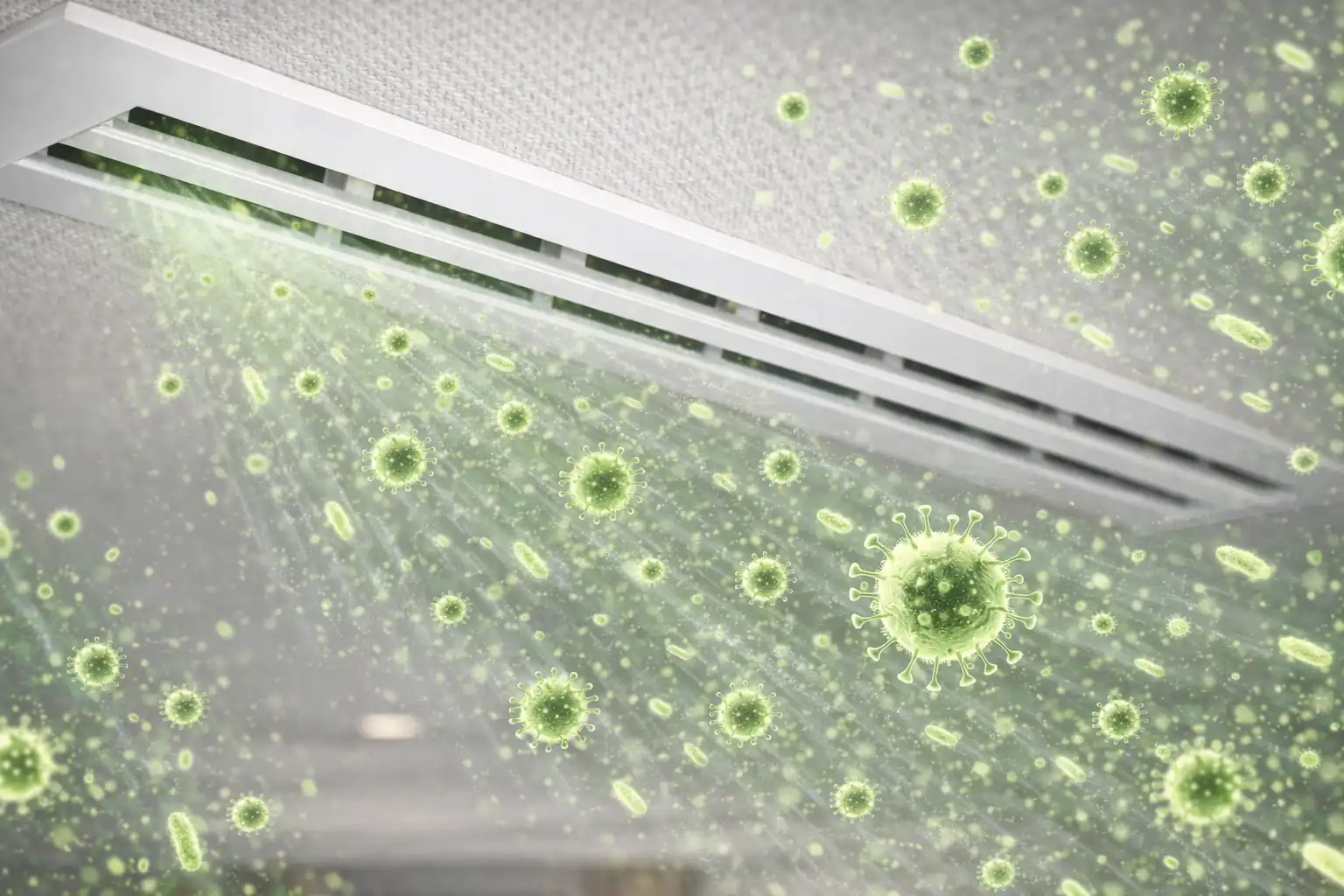
Air vent releasing airflow inside a yacht interior, with subtle airborne particle imagery suggesting HVAC hygiene risk.
HVAC systems can move more than air. Poorly maintained vents, coils and ducting may allow particles, moisture and biological debris to circulate through accommodation spaces.

Where Water Control Drifts First

Freshwater systems are sophisticated yet rarely operate under the kind of stable, continuous conditions that lab tests assume. Risk does not arise from a single point of failure but from a set of structural realities that compound.
 
UK maritime guidance on ‘shipboard food and freshwater management’ clearly links contamination to the entire chain: storage, distribution, loading procedures, tank design, and inadequate disinfection.
 
Sewage, too, is recognised as a common vehicle of outbreaks. In practice, risk most often develops within the distribution system itself, not at the bunkering point.
 
Once biofilm has established, microorganisms are partially shielded from disinfectants. Mineral scale compounds this protection, which is why freshwater system descaling has a role in wider water hygiene control.
 
The WHO Guide to Ship Sanitation makes the same broader point: shipboard health risk has to be managed across systems, procedures and control measures, not at a single outlet.

Waste Systems are not Isolated

Black and grey water systems accumulate mineral scale and organic build-up over time. As internal diameters narrow, flow performance declines, whether caused by gravity or vacuum conveyance. Flow slows and clearance decreases; sediment settles, and microbial communities inevitably establish within the deposits.
 
Although physically separate from potable water by infrastructure, these systems are not entirely isolated in practice. Gas migration, leakage and maintenance cross-connections often allow downstream conditions to influence the wider onboard environment.
 
Descaling is not housekeeping. It is a structural intervention. Completely removing accumulated mineral and organic build-up eliminates persistent reservoirs. Localised dosing stabilises clean systems to a point, but the reach and effectiveness are limited; scale inevitably develops downstream.
Cutaway view of a black and grey water pipe with scale build-up, restricted flow and gas rising from wastewater deposits.
Waste systems are not isolated. Scale, organic build-up and restricted flow can allow odour, gas migration and recurring maintenance issues to develop out of sight.

Air Systems Do Not Stay Neutral

HVAC systems shape the onboard microclimate in ways that are often underestimated until something goes wrong. They do not simply move air from one place to another; they distribute whatever that air carries and can themselves become contaminated environments.

HVAC is not passive infrastructure. It multiplies exposure when neglected and stabilises the onboard environment when maintained.

Where Air and Water Meet

Cooling coils continuously generate condensate, and drain trays are intentionally designed to remain damp. Humidification systems may introduce moisture in controlled ways. These wet interfaces are essential, designed elements, rather than accidental or residual. If contamination is present upstream, airflow distributes it throughout accommodation spaces. The apparent source may be airborne, but technically, the origin is often in water that has been left to stand.

Practical HVAC Hygiene

Effective intervention here focuses on removal and stabilisation rather than treatment applied over the top of existing build-up. That means cleaning air-handling units and fan coils properly, removing accumulated dust and biological debris throughout the entire system, managing condensate trays and drains as active biological zones, and applying targeted disinfection where moisture persists as surface conditions have allowed growth to establish.
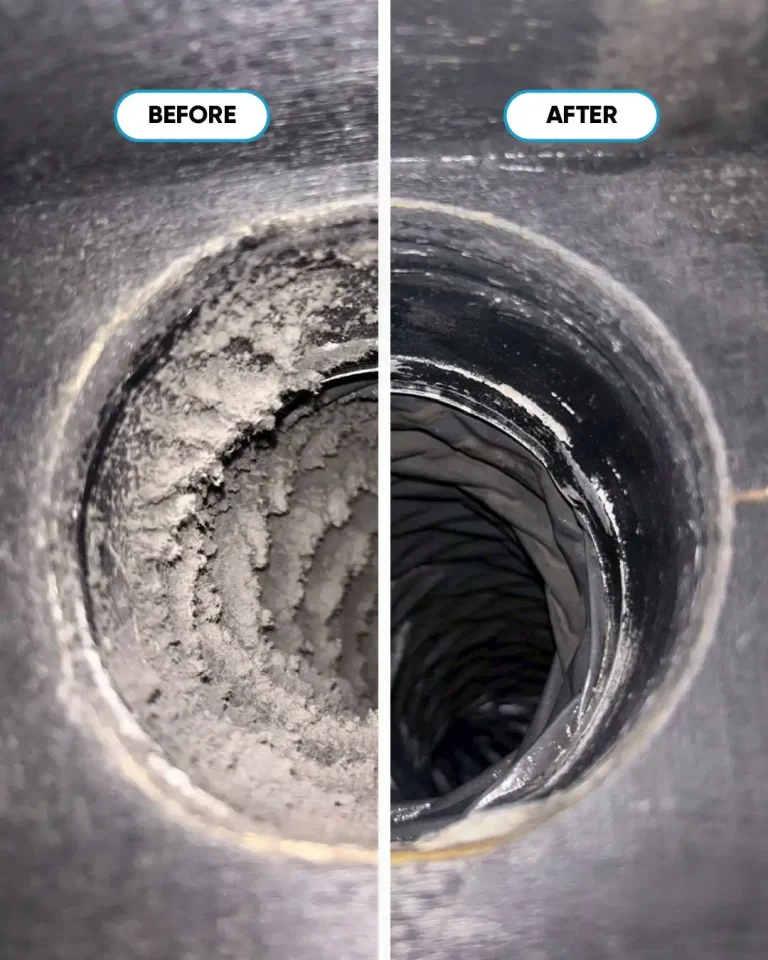
Before and after HVAC duct cleaning showing heavy internal dust build-up removed from a marine ventilation duct.

Ozone: The Finishing Step

Ozone is a powerful oxidation tool when used correctly. It reacts at a molecular level, breaking down residual organic compounds and reducing airborne microbial load in enclosed spaces that mechanical access cannot fully reach. In doing so, it resets the atmospheric environment.

Why Sophistication Increases Sensitivity

Superyachts are engineered for discretion and comfort. Systems are concealed. Access is frequently constrained. Pipe runs extend further than most realise. Air-handling components sit within tight envelopes with little clearance. The same priorities that make these vessels exceptional to inhabit are the ones that make their systems harder to maintain at the standard the biology requires.
 
As yachts increase in size, complexity multiplies in ways that are not linear. More cabins mean more branch lines. Expanded amenities increase storage volume, heating and cooling cycles, and condensate production. The more advanced the vessel, the more interdependent its systems become. Small drifts travel farther before they surface as complaints that do not initially resemble engineering problems.
 
There is also a cultural layer worth naming. Health issues onboard are rarely discussed openly. Symptoms are managed discreetly, attributed elsewhere, or simply endured. Crew turnover obscures recurring patterns throughout seasons. Silence does not imply absence. It frequently reflects resolution before escalation. And resolution before escalation allows the pattern to continue.
 
To counter this, yachts need simple routes for small observations to be recorded before they become patterns. A recurring odour, a cabin-specific irritation, a slow drain, a fan coil issue, or a change in water temperature may seem minor in isolation. Taken together, these details can point to system drift.
Engineers, interior teams, officers, and managers should be able to share those observations without blame, then match them against flushing records, HVAC inspections, water temperatures, odour reports, and recent maintenance work.

Control is not a moment. It is a maintained condition.

 
That means clear ownership, routine checks, and records that connect comfort, hygiene, and system condition. The aim is not to create more paperwork. It is to give crews a way to see drift early, before guests or crew start living with the consequences.
 
For clarity and accountability, a straightforward reporting chain is essential. All crew members should report potential hygiene concerns, system irregularities, or persistent symptoms directly to their department head. Department heads in turn report these observations to the Chief Engineer (for technical issues) or the Chief Steward/Stewardess (for cleanliness and symptoms), who together brief the Captain during routine vessel management meetings. This structure ensures that no detail is missed and creates a clear route for action and follow-up.
 
Regularly assess, clean, and maintain your vessel’s systems with a preventive focus. By clearly dividing and documenting tasks among the crew, you ensure accountability and sustained vigilance. By prioritising invisible system integrity, you safeguard health and comfort onboard. Stay proactive and make the onboard environment a strategic, ongoing priority.

Author Note

Clearvac Engineering Asia works with superyachts, cruise ships, and commercial vessels across Southeast Asia and beyond.
 
Services include HVAC hygiene, freshwater system descaling, descaling of black and grey water pipes, and removal of fire risks from galley and laundry extraction systems.
 
The company focuses on the hidden infrastructure behind onboard comfort, hygiene, and operational reliability, with practical intervention supported by photographic reporting and technical documentation.

Related Clearvac Services

  • Marine HVAC cleaning and disinfection
  • Freshwater system descaling
  • Black and grey water pipe descaling
  • Galley and laundry extraction cleaning
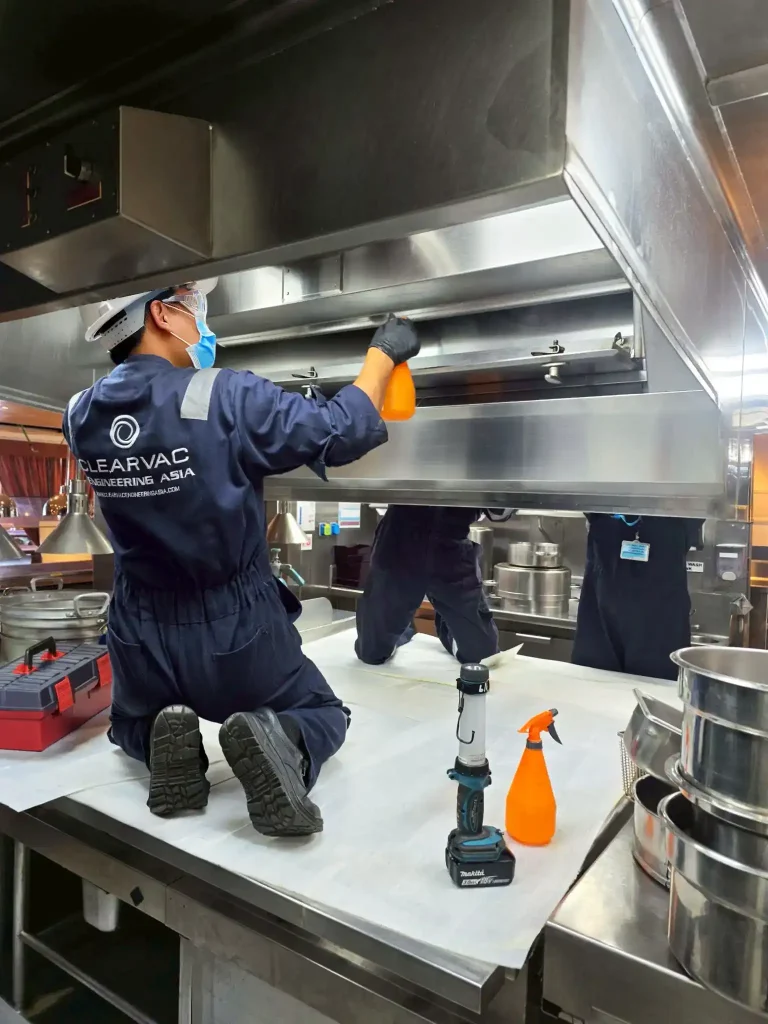
 

Clearvac Engineering Asia technician cleaning a stainless-steel galley extraction system onboard a vessel.

References

1.     European Centre for Disease Prevention and Control (ECDC). Legionnaires’ disease: Annual Epidemiological Report for 2022.
 
2.     Ülger M, Tezcan Ülger S, Bekçi A, Ötgün SN, Delialioğlu N, Aslan G. “Legionella species isolated in the water systems of ships and their molecular characterization.” Mikrobiyoloji Bülteni. 2022.
 
3.     UK Maritime & Coastguard Agency. MGN 525 (M+F) Amendment 1: Merchant shipping and fishing vessels – Guidelines for the provision of food and fresh water.
 
4.     World Health Organization (WHO). WHO Guide to Ship Sanitation (3rd edition). Geneva: WHO; 2011.
 
5.     Wang Y, et al. “Mechanism and Risk Control of Chlorine-Resistant …” Water (MDPI). 2025.
 
6.     Epelle EI, et al. “Application of Ultraviolet-C Radiation and Gaseous Ozone …” ACS Omega. 2022.

Related Marine Systems Resources

CONTACT US TO DISCUSS

Share:

Facebook
Twitter
Pinterest
LinkedIn